Key takeaways
- CJC-1295 and ipamorelin both cause the pituitary gland to release more growth hormone.
- Small human studies confirmed that effect, but neither compound was approved as a drug.
- There is no long-term safety data, and both are banned in sport.
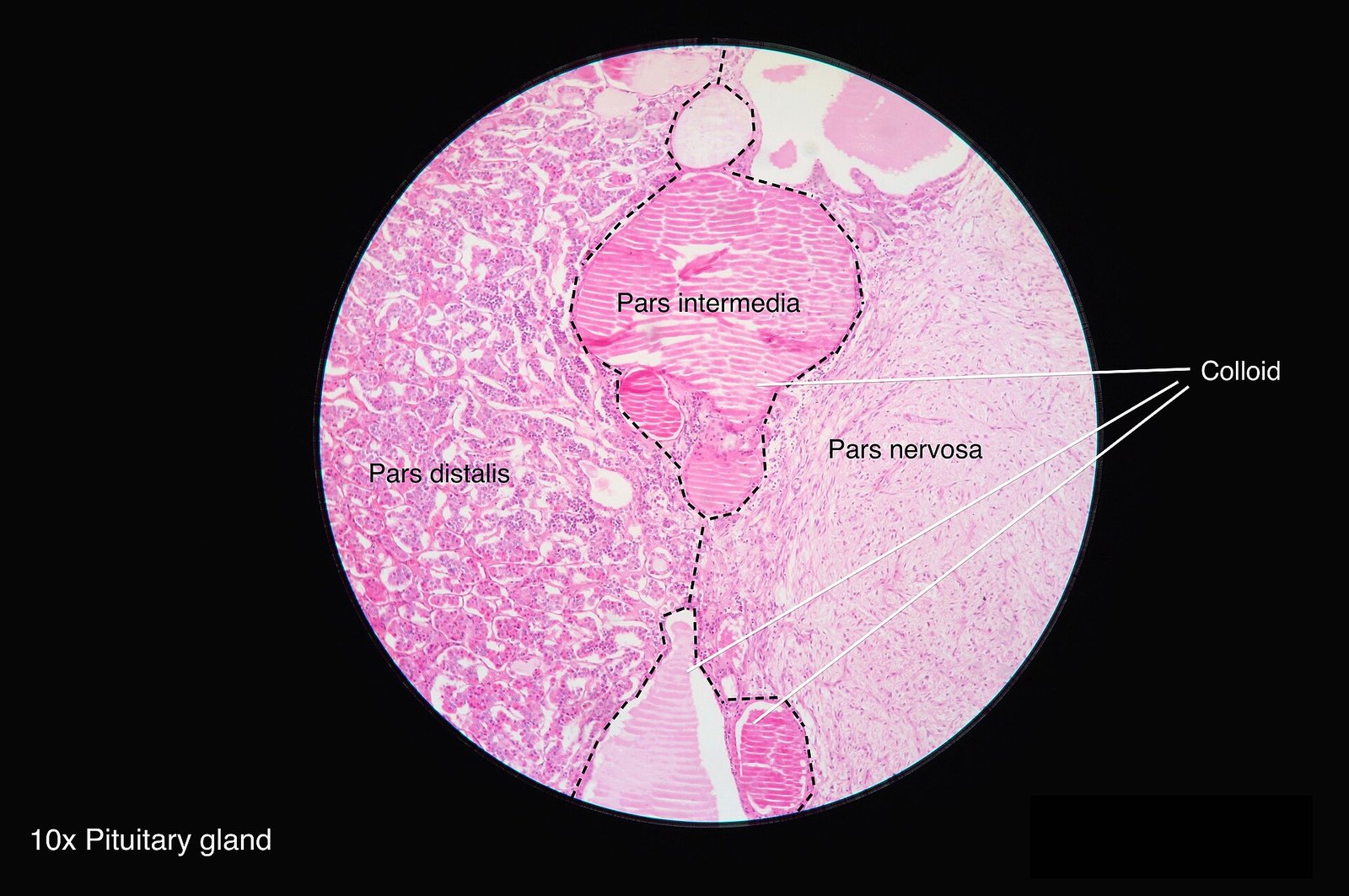
Growth hormone is released by the pituitary gland, a pea-sized gland at the base of the brain. Two natural signals tell it to release more: a hormone from the brain called GHRH, and ghrelin, a hormone better known for its role in hunger.
CJC-1295 is a modified version of GHRH designed to last for days instead of minutes. Ipamorelin mimics ghrelin at its receptor. Both lead to the body releasing more of its own growth hormone.
What did studies find?
A 2006 study in healthy adults found that CJC-1295 raised growth hormone and IGF-1 levels for several days. Its development as a drug was later discontinued.
Ipamorelin was tested in a phase 2 trial in people recovering from bowel surgery, to see whether it helped the gut start working again sooner. It was well tolerated but did not work better than placebo.
Neither compound has been studied in trials looking at muscle, body fat, aging or recovery in healthy people.
What are the risks?
- Higher growth hormone and IGF-1 levels can affect blood sugar and cause fluid retention.
- The long-term effects of raising IGF-1, including on cancer risk, are not known.
- Unregulated products may be mislabeled or contaminated.
The bottom line
Both compounds do what they were designed to do in the short term: raise growth hormone. Whether that leads to any meaningful benefit, and at what risk, has not been shown.
References
- Teichman SL, et al. Prolonged stimulation of growth hormone (GH) and insulin-like growth factor I secretion by CJC-1295, a long-acting analog of GH-releasing hormone, in healthy adults. J Clin Endocrinol Metab. 2006;91:799-805.
- Beck DE, Sweeney WB, McCarter MD. Prospective, randomized, controlled, proof-of-concept study of the ghrelin mimetic ipamorelin for the management of postoperative ileus in bowel resection patients. Int J Colorectal Dis. 2014;29:1527-1534.
- World Anti-Doping Agency. The Prohibited List.